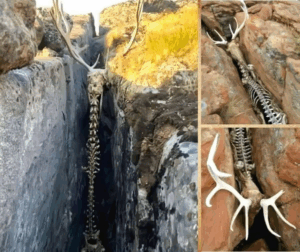
Between two ancient slabs of stone—weathered by centuries of wind and time—rests the final sculpture of nature’s quiet cruelty: the remains of a great stag, caught in the slow, geological jaws of a mountain. Its antlers still stretch toward the sky, proud and ghostly white, while its spine plunges downward into the narrow crevice, each vertebra intact like a zipper closing time shut.
How it came to rest here is both simple and haunting. Perhaps the animal slipped, misjudging the narrow gap while navigating rocky terrain. Or perhaps the earth itself shifted around it, trapping the beast mid-stride in a stone embrace it could never escape. Either way, what remains is a perfect fossil of fate—death frozen not in ice, but in stillness.
To some, it is merely the skeleton of a deer. To others, it is a symbol: of nature’s indifference, of the quiet violence in survival, or of how the earth remembers its guests long after breath has left them. The stag’s bones whisper a question to every hiker who stumbles upon it: how many stories lie hidden in the cracks beneath our feet?